
What You Get in MergedCode
A practical breakdown of every major track in MergedCode — DSA sheet, Core CS hubs, system design workspaces, bookmarks, and synced progress across web and mobile.
MergedCode is built for repeat revision, not first-time discovery. You get one account, one layout language, and one progress model across DSA practice, Core CS, and system design. Below is what is actually inside the product today — and how each piece fits a weekly prep loop.
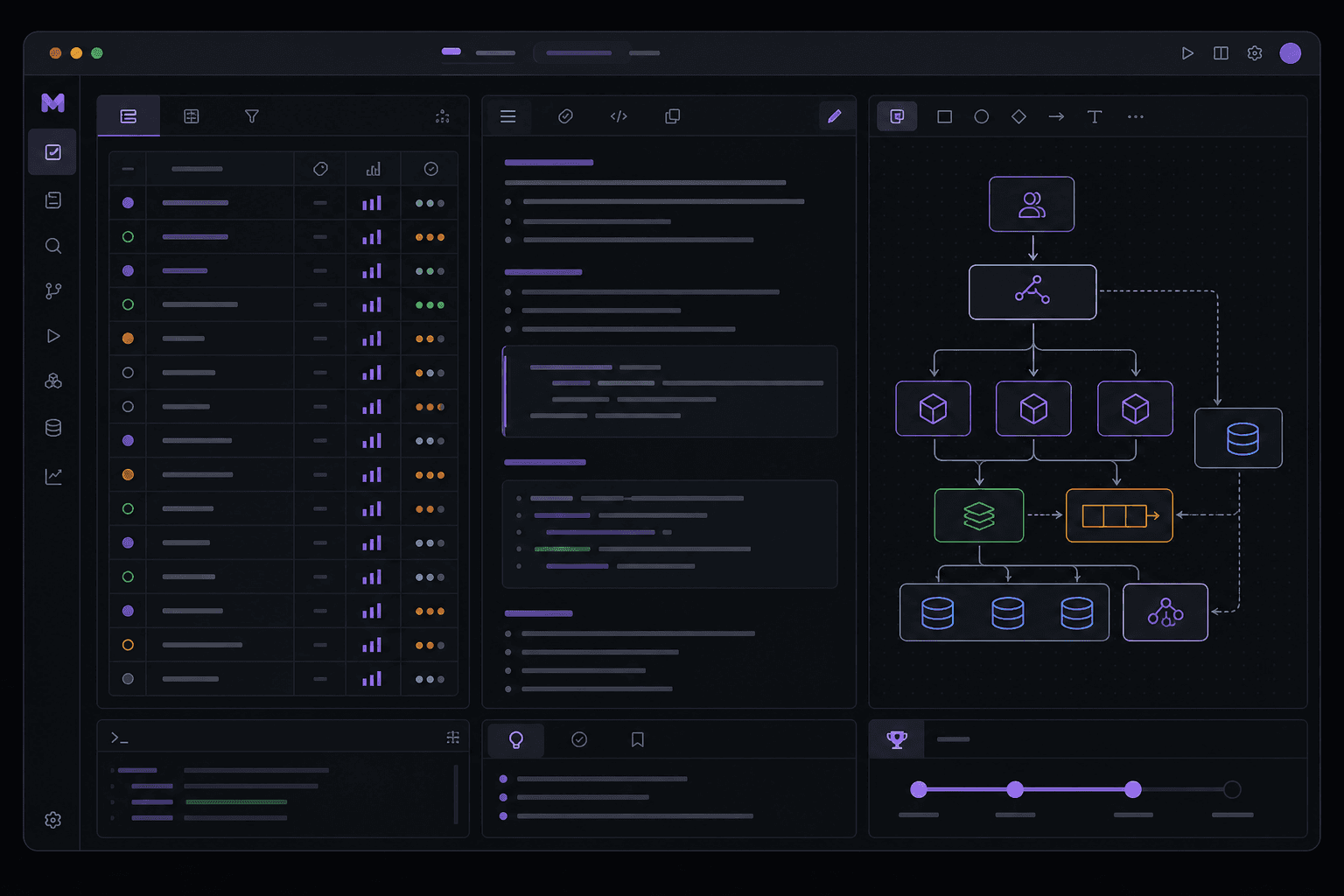
The three prep tracks
Most candidates split prep across disconnected tools. MergedCode keeps the same navigation patterns whether you are solving a graph problem, revising DBMS transactions, or sketching a URL shortener.
| Track | What it covers | Primary outcome |
|---|---|---|
| DSA merge sheet | 540+ curated problems with difficulty, topic, and progress | Faster second-pass revision with less spreadsheet friction |
| Core CS hubs | DBMS, OS, networking, OOP, DevOps, and more | Interview-sized Core CS notes beside your problem list |
| System design | Fundamentals, HLD, and LLD theory plus diagram workspaces | Cleaner whiteboard answers under time pressure |
DSA merge sheet
The merge sheet is the daily driver. Every row is a real problem with metadata you actually use during revision: difficulty, topic tags, solved state, and quick access to the full workspace.
| Capability | Guest preview | Full access |
|---|---|---|
| Problem statement & examples | Yes | Yes |
| Topic / difficulty filters | Yes | Yes |
| Company tags | No | Yes |
| Solution explanation & code | No | Yes |
| Approach diagrams | No | Yes |
| Solved markers & custom sheets | No | Yes |
A practical rhythm: solve new mediums during the week, re-open bookmarked problems before mocks, and mark a row solved only when you can explain the approach without rereading the editorial.
Core CS hubs
Core CS is organized like subjects, not random markdown dumps. Each hub has ordered lessons and interview question sets so you can jump directly to the chapter that matches a weak DSA topic.
| Subject area | Notes | Interview questions |
|---|---|---|
| DSA fundamentals | Core patterns and topic outlines | Common follow-up prompts |
| DBMS | Transactions, indexing, normalization | Query and design questions |
| Operating systems | Processes, memory, scheduling | Concurrency and trade-off questions |
| Computer networking | HTTP, TCP, DNS, load balancing | Protocol and reliability questions |
| OOP & DevOps | Design principles and delivery basics | Design and operations questions |
Use Core CS when a problem exposes a gap — for example, revisiting isolation levels after a locking question, or refreshing CAP trade-offs before a distributed systems mock.
System design workspaces
System design is split into fundamentals, high-level design (HLD), and low-level design (LLD). Theory lessons teach the vocabulary; problem workspaces give you a canvas to practice under interview constraints.
| Layer | Content type | Workspace feature |
|---|---|---|
| Fundamentals | Framework, NFRs, study flow | Guided theory path |
| HLD | Building blocks, consistency, queues | Excalidraw architecture diagrams |
| LLD | OOP, SOLID, patterns | Class-level design prompts |
Each problem workspace pairs a concise brief with a pan-and-zoom diagram canvas. The goal is not pixel-perfect diagrams — it is repeatable structure: requirements, estimates, API shape, data model, bottlenecks, and failure modes.
Cross-cutting features
These are the features that make the three tracks feel like one product instead of three tabs.
| Feature | Works on | Why it matters |
|---|---|---|
| Bookmarks | DSA, Core CS, system design | One revision queue before interview week |
| Custom sheets | DSA | Company-specific or topic-specific lists |
| Activity heatmap | Account-wide | Visible consistency over months, not days |
| Web + mobile | Same account | Commute-friendly revision without losing context |
Suggested weekly loop
| Day | Focus | Time box |
|---|---|---|
| Mon–Thu | 1–2 DSA problems from the merge sheet | 45–60 min |
| Wed | 1 Core CS chapter tied to a weak topic | 30 min |
| Fri | 1 system design prompt with a timed diagram | 45 min |
| Weekend | Bookmarks review only — no new topics | 60 min |
Access model
MergedCode is paid-only through Razorpay. There is no partial free tier that hides random chapters mid-revision. Sign in, choose monthly or yearly billing, and every track above unlocks immediately — including bookmarks, progress sync, and full solution content.
If you are starting today, open the merge sheet first, star two Core CS chapters you always forget, and bookmark one HLD problem to retry next Friday. That small loop is the product working as intended.